
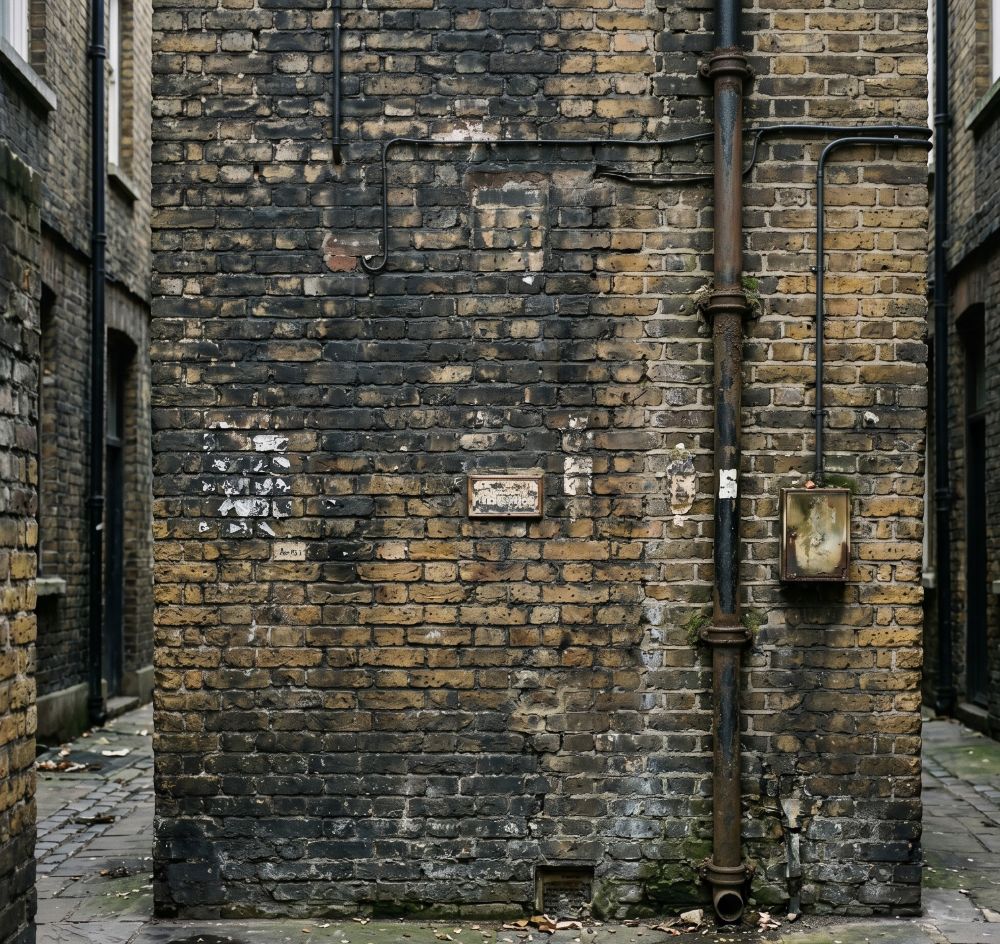
The yellow London stock brick is one of the defining materials of the city. It built the Georgian squares and the endless Victorian terraces, and in its original state it is a warm, soft, buff-yellow stone flecked with darker grain. Walk down most inner-London streets today, though, and you will see it in a very different condition: streaked and crusted in black, the colour of a century and a half of coal smoke and traffic fumes baked onto the face. The temptation, faced with a wall like that, is obvious. Rent the most powerful pressure washer available, or call someone with a sandblaster, and blast the brick back to its original yellow in a weekend. It is one of the most damaging things you can do to a historic London building, and on a listed or conservation-area property it can also be against the law. London stock brick is soft, porous and far more fragile than it looks, and cleaning it safely is as much about restraint and the right paperwork as it is about technique.
What Is London Stock Brick, and Why Does It Blacken?
London stock brick is the soft, yellowish hand-made brick that built most of Georgian and Victorian London, fired from local brickearth mixed with chalk and ash. It was produced in vast quantities from the eighteenth to the early twentieth century, and its characteristic colour – anywhere from pale yellow to a dirty brown – comes from the local clay and the chalk content. Crucially, it was fired at relatively low temperatures by modern standards, which makes it softer and more porous than the hard engineering bricks people picture today, and that softness is the whole reason it must be treated with care.
The Fire Skin That Protects the Brick
The single most important thing to understand about stock brick is the fire skin. When the brick was fired, its outer surface vitrified into a slightly harder, denser layer – the fire skin – while the body behind it stayed comparatively soft and open. That thin skin is what protects the brick, sealing the porous core against water and weather. As long as it is intact, the brick can shrug off the London climate for centuries. Once it is broken or stripped away, the soft body beneath is exposed, and it erodes, crumbles and absorbs water at a frightening rate. Almost every serious way of damaging stock brick comes down to the same thing: destroying the fire skin.
Where the Black Comes From
The blackening on London brick is mostly soot and pollution, bound onto the surface by a chemical reaction. For a hundred years and more the air carried coal smoke, and later diesel and traffic fumes, depositing carbon onto the brickwork. On the calcareous, chalk-rich stocks this is made worse by sulphation, where airborne sulphur reacts with the brick and mortar to form a hard crust of gypsum that traps the soot and cements it in place. This is why the black is heaviest in sheltered spots that rain never reaches – under sills, in porches and beneath overhangs – while rain-washed areas often stay paler. That uneven pattern is itself a useful clue: a wall that is dark only where it is sheltered is carrying a sulphation crust rather than loose surface dirt, and a hard gypsum crust calls for far more caution than simple grime, because the crust and the fire skin can come away together if the cleaning is too forceful. The crust is genuinely stuck to the surface, which is exactly why people reach for aggressive methods to shift it, and exactly why those methods do so much harm.
Why Is Pressure Washing So Dangerous on Stock Brick?
Pressure washing is dangerous on stock brick because the jet strips the protective fire skin and drives water deep into the soft body behind it. A high-pressure lance does not gently lift the soot; it erodes the whole surface, blasting away the thin fired skin along with the dirt and opening up the porous core underneath. Once that happens the brick begins to spall, shedding its face in flakes, and it soaks up rainwater that then freezes and breaks it apart further each winter. The wall may look cleaner for a season, but it has been left defenceless, and the decay that follows is permanent and accelerating. The soft lime mortar in the joints fares no better, scoured out by the same jet and leaving the wall open to water all over again.
Sandblasting and Acid – The Two Worst Mistakes
Sandblasting and acid cleaning are even more destructive than a pressure washer, and both have ruined countless London buildings. Abrasive grit blasting tears the fire skin off wholesale, leaving a rough, open surface that weathers far faster than it ever did dirty – it is condemned by every conservation body and, on protected buildings, generally forbidden. Acid washing, usually with spirit of salts, is the other classic disaster. The acid attacks the lime mortar and the brick alike, and it reacts with mineral salts in the clay to leave permanent green or brown staining that no later cleaning can remove, while the salts it leaves behind drive efflorescence and decay for years afterwards. Both methods promise a fast, dramatic result and deliver lasting damage in exchange.
How Should Blackened London Stock Brick Be Cleaned?
Blackened stock brick should be cleaned with the gentlest effective method, built around water, low pressure and patience rather than force. The conservation principle is always to start with the least aggressive approach that works and stop the moment the surface is acceptably clean, rather than chasing a factory-fresh finish the brick has not had since it was laid.
Start Gentle and Test First
The safest cleaning is fine water misting and a soft brush, with every method tested on a small patch first. A light, intermittent spray of low-pressure water softens the soot and crust over time, after which it can be worked loose with a soft bristle brush – never a wire one. For heavier crusts, professionals use gentle systems designed specifically for historic masonry: superheated low-pressure steam, which lifts soot and biological growth without abrasion, and soft swirling granulate systems that clean at very low pressure. All of these are far gentler than a domestic pressure washer. Whatever the method, a discreet test patch comes first, because brick varies from wall to wall and the only way to know how a surface will respond is to try it somewhere that does not matter. It is also far better to make several gentle passes over a few sessions than to clean hard in one go: each light pass lifts a little more of the crust, and stopping while the brick is still slightly weathered is always safer than pushing one step too far and reaching the fire skin. For isolated stubborn stains, a poultice – an absorbent paste left on the surface to draw the staining out as it dries – can lift a specific mark without subjecting the whole wall to any pressure at all.
The Mortar Mistake That Outlasts the Clean
Repointing stock brick in cement rather than lime undoes the whole job and slowly destroys the wall. Modern cement mortar is harder and far less breathable than the soft brick around it, so when moisture tries to leave the wall it can no longer escape through the joints and is forced out through the face of the brick instead. The salts it carries crystallise just under the surface and blow the fire skin off from within, spalling brick after brick while the cement joints stand proud and intact. Soft lime mortar, which is what these walls were always built with, stays softer than the brick and lets the wall breathe. Cleaning a wall and then repointing it in cement is a common and costly contradiction.
Do You Need Permission to Clean Brickwork in London?
You may well need permission, because a great deal of London’s stock brick sits on listed buildings or within conservation areas. On a listed building, cleaning that would affect its character can require Listed Building Consent, and abrasive methods such as sandblasting almost certainly will – carrying them out without consent is a criminal offence, not merely a planning matter. In conservation areas, which blanket much of inner London, local authorities often have guidance on masonry cleaning, and some areas carry Article 4 directions that remove rights you might otherwise assume you had. Even where consent is not strictly required, the appearance of the street is a shared asset that the designation exists to protect. The sensible course before cleaning any older London brickwork is to check the building’s status with the local planning authority first, because the cost of getting it wrong on a protected building is far higher than the cost of asking. A building’s listed status can be checked online through the National Heritage List, and the local authority can confirm whether a property falls within a conservation area or carries an Article 4 direction.
Should You Clean It At All?
The hardest thing to accept is that sometimes the right answer is to leave the brick alone. A stable black crust is doing no structural harm in many cases, and removing it always carries some risk to the surface beneath, so cleaning purely for appearance is a genuine decision with a downside, not an automatic improvement. Where the soot is trapping damp, hiding decay or genuinely disfiguring a fine facade, careful cleaning is well worth doing – but it should be done gently, tested first, and never in pursuit of a brightness the brick never originally had. London stock brick wears its age honestly, and the goal is a sound, breathable, gently cleaned wall that will last another century, not a stripped and scoured one that looks briefly bright and then falls apart. Restraint, on this particular material, is not laziness. It is the whole skill.