Somewhere along the way, cleaning the outside of a house became synonymous with one sound: the high whine of a pressure washer throwing water at three thousand pounds per square inch. It is a brilliant tool, and on the right surface there is nothing better. The trouble is that a great many of the surfaces around a typical London home are exactly the wrong ones, and aiming a powerful jet at them does more harm than the dirt ever would. A render finish, a tiled roof, a soft Victorian brick wall, a painted timber porch – these are not jobs for brute force, and treating them as if they were is how expensive damage gets done in the name of a clean-up. The honest answer to how you should clean your property is that it depends entirely on the surface and on what is actually dirtying it. For roughly half of what a London house is built from, the better tool is not more pressure but less, paired with the right chemistry. That approach has a name, and understanding the difference between it and pressure washing is the key to cleaning anything outdoors without wrecking it.
What Is the Difference Between Soft Washing and Pressure Washing?
The difference is simple: pressure washing removes dirt by mechanical force, while soft washing removes it by chemistry at very low pressure. One blasts the surface clean; the other treats it clean. They are not competing versions of the same thing – they are two different tools for two different kinds of problem, and the skill lies in knowing which problem you have.
How Pressure Washing Cleans
Pressure washing cleans by sheer physical force, using a high-velocity jet of water to blast dirt off a surface. Domestic machines typically run somewhere between 1500 and 3000 PSI, and that concentrated energy is what shifts ground-in grime, oil and surface muck from hard materials. It is fast, it uses nothing but water, and on a sound, durable surface the result is immediate and impressive. The catch is that the force which lifts the dirt does not distinguish between dirt and the surface underneath it. On anything soft, porous, coated or fragile, that same energy pits, cracks, strips and erodes, which is why pressure washing is the right answer for some materials and a genuinely destructive one for others.
How Soft Washing Cleans
Soft washing cleans by applying a specialist cleaning solution at very low pressure and letting the chemistry do the work. The water comes out at little more than garden-hose pressure, often under 100 PSI at the surface, so it cannot damage anything. The cleaning is done not by force but by a biocidal solution, usually based on sodium hypochlorite with added surfactants, which is applied to the surface and left to dwell. It kills the algae, moss, lichen, mould and bacteria living on the material, breaking down the organic staining so it can be gently rinsed away. Because the active ingredient does the cleaning, the pressure can stay low enough to be safe on the most delicate finishes, and that is the whole point of the method.
Why Does Soft Washing Last Longer?
Soft washing lasts far longer than pressure washing because it kills the organism rather than just removing what you can see. Most of the green, black and grey staining on a damp London wall or roof is not dirt at all but living growth – algae, lichen and moss – and these organisms anchor themselves into the surface with roots, hold-fasts and fine threads that reach below the visible layer. A pressure washer strips off the top growth and leaves the surface looking clean, but it leaves the roots and spores behind, so the colony simply regrows, often within a few months and sometimes worse than before. Soft washing kills the growth all the way down, including the spores that would otherwise reseed it. The surface stays clean for far longer as a result – typically several times longer than a jet wash on the same wall – because you have dealt with the cause rather than the symptom. For anything fouled by biological growth, this is the decisive advantage. It also means fewer cleans over the years, which matters on awkward surfaces like roofs and upper walls where each visit is a significant undertaking in its own right.
When Should You Use Pressure Washing?
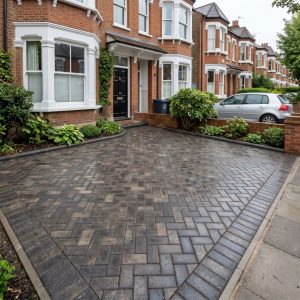
You should use pressure washing on hard, sound, durable surfaces where the dirt is the problem and the material can take the force. Concrete driveways, robust paving and patio slabs in good condition, and tough ground-level surfaces carrying mud, oil and ingrained grime are all natural candidates. These materials are dense and hard-wearing, the dirt sitting on them is largely non-living, and a jet of water is the quickest way to shift it. Block paving sits in this category too, though with the important caveat that the jointing sand must be protected and replaced. Natural stone needs a little more judgement: hard, dense stone such as granite or good-quality sandstone in sound condition takes a jet well, but softer or older stone that has begun to flake or delaminate should be treated with the same caution as any fragile surface. The common thread is that pressure washing belongs on horizontal, hard, structurally sound surfaces where mechanical force is appropriate and the worst you risk is a little sand loss rather than permanent damage to the material itself.
When Should You Use Soft Washing Instead?
You should use soft washing on anything soft, porous, coated, fragile or biologically fouled – which covers a surprising amount of a typical house. The rule of thumb is that the moment you move off the ground and onto the building itself, or onto any delicate or living-stained surface, the lance should go away and the low-pressure approach should take over.
Roofs and Render – Never Pressure Wash These
Roofs and render are the two surfaces where pressure washing causes the most expensive damage, and both should always be soft washed. On a tiled roof, a high-pressure jet strips the protective surface off concrete tiles, dislodges and cracks them, blasts out the mortar and forces water up under the tiles into the roof space, turning a cosmetic job into a leak. On rendered walls, including the monocouche, silicone and pebbledash finishes common on London extensions and converted flats, the jet pits and cracks the surface and drives water behind the render, where it causes blowing and frost damage later. Both surfaces are typically covered in exactly the kind of algae and lichen that soft washing is designed to kill, so the gentle method is not only safer but more effective.
Soft Brick, Wood and Painted Surfaces
Soft brick, timber and painted surfaces all demand the low-pressure approach as well. Older London stock brick and the soft lime mortar around it are easily eroded by a powerful jet, which spalls the face of the brick and scours out the joints. Timber – decking, fences, fascias and porches – splinters and furs up under high pressure as the soft grain between the harder rings is torn away. Painted and coated surfaces simply lose their finish. In every one of these cases the staining is usually organic and shallow, so a biocidal treatment lifts it without any of the force that would damage the material underneath.
What Does the Soft Washing Process Involve?
Soft washing involves applying the solution, letting it dwell, and rinsing or allowing it to weather away, with care taken to protect everything around the surface. The cleaning solution is applied at low pressure from the bottom of the wall upwards to avoid streaking, then left to dwell for anywhere from a few minutes to half an hour while it kills the growth and breaks down the staining. On walls and render it is then rinsed off at low pressure; on some roofs the treatment is left to be weathered clean by rain over the following weeks, with the colour continuing to lift long after the work is finished. The one real hazard is the solution itself. Sodium hypochlorite will scorch foliage and damage some surfaces if it is splashed about carelessly, so any plants near the work are thoroughly wetted with plain water before and after treatment, sensitive ones are covered, and surrounding paths and glass are rinsed down. Done properly the garden comes to no harm, but it is the part of the job that rewards patience and preparation, and it is why a careful soft wash is a slower, more deliberate process than simply pointing a lance and pulling the trigger.
Which Does Your London Property Actually Need?
Most London properties need both methods, applied to different parts of the building. The capital’s housing stock is a particular mix – period terraces with soft brick and clay or slate roofs, rendered extensions, paved front gardens turned into parking, and a damp, shaded, polluted climate that grows algae and lichen with enthusiasm. That combination means a single property will often want pressure washing on the driveway and patio, and soft washing on everything vertical above it. North-facing and tree-shaded walls, which London has in abundance, are especially prone to the green and black biological growth that only soft washing truly resolves. The practical way to decide is to ask two questions of each surface: is it hard and sound enough to take a jet, and is the problem dead dirt or living growth? Hard surface plus dead dirt points to pressure washing. Anything delicate, or any surface where the stain is alive, points to soft washing. Get those two judgements right, surface by surface, and you clean the whole property thoroughly without trading a bit of grime for lasting damage. The mistake to avoid is the most common one of all – reaching for the pressure washer by default and using it on everything, simply because it is the tool already in your hand.